
Q4 2025 Update: What’s New at Ping Proxies

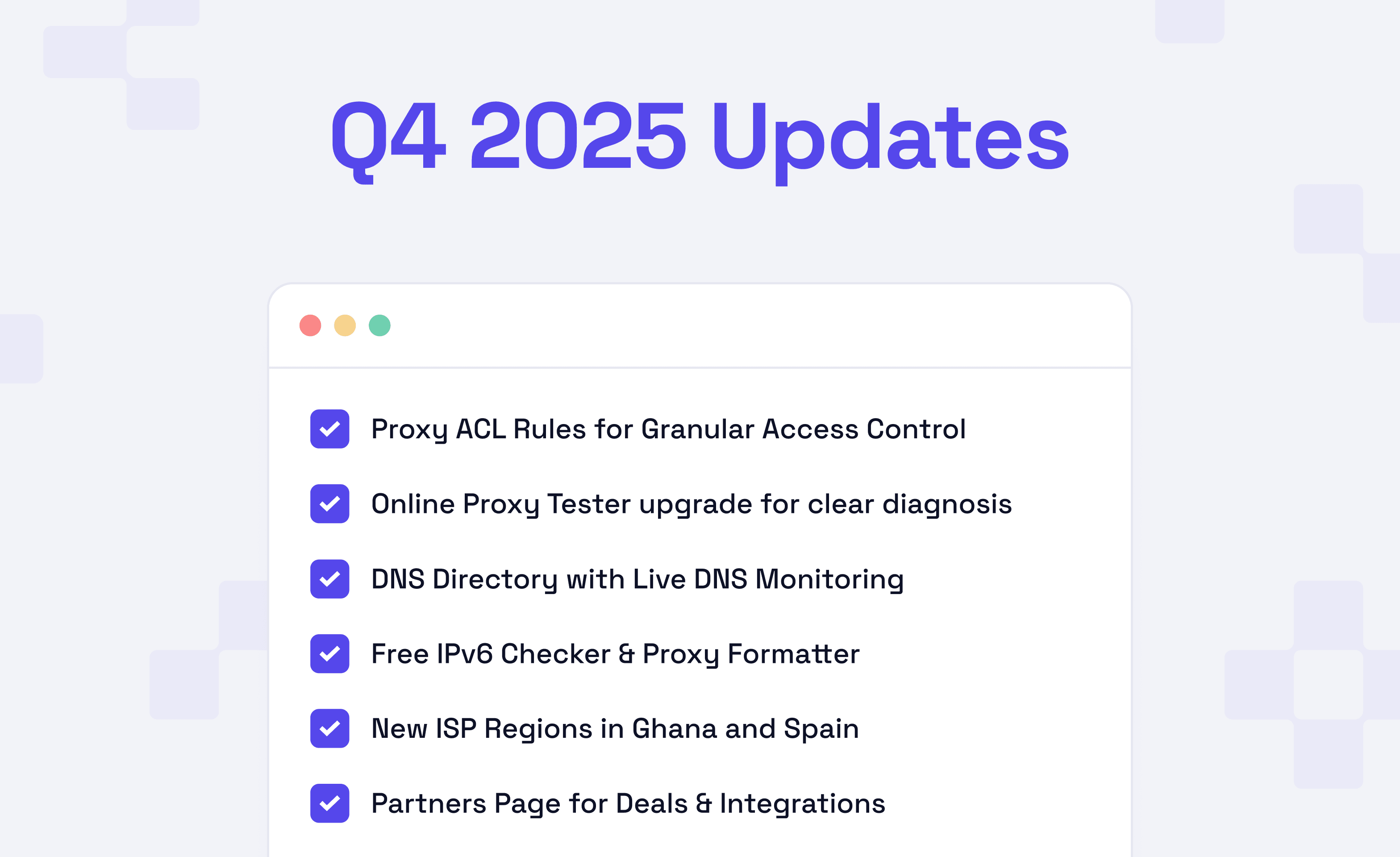
In the final quarter of 2025, we wanted to make it easier to run and manage proxies at scale. To achieve it, we heard from our customers. Our goal was not just to address the issues but to enhance the overall proxy experience.
We shipped proxy access controls and upgraded the proxy tester, which now presents clearer diagnostics when requests fail. Expanded our ISP coverage into underserved regions and launched a new partner page with a focus on benefiting clients and individuals.
Also, tools (DNS, IPv6, and proxy formatting) were made free for everyone to support achieving better proxy setups.
We’re all hyped to share what we shipped in Q4! Let’s have a quick walkthrough.
Control Proxy Access with ACL Rules
Customers have been using our proxies across teams, tools, and projects. It became difficult to manage proxies, so they asked for more flexibility and control over who can use what.
To make it easier, we introduced Proxy User ACL Rules, which allow each proxy user to be configured with granular access limits. This grants complete control over which proxies and services they can use.
We made it available across both Residential and Static proxy products (Datacenter and ISP), and you can manage these settingsin the dashboard and via our API.
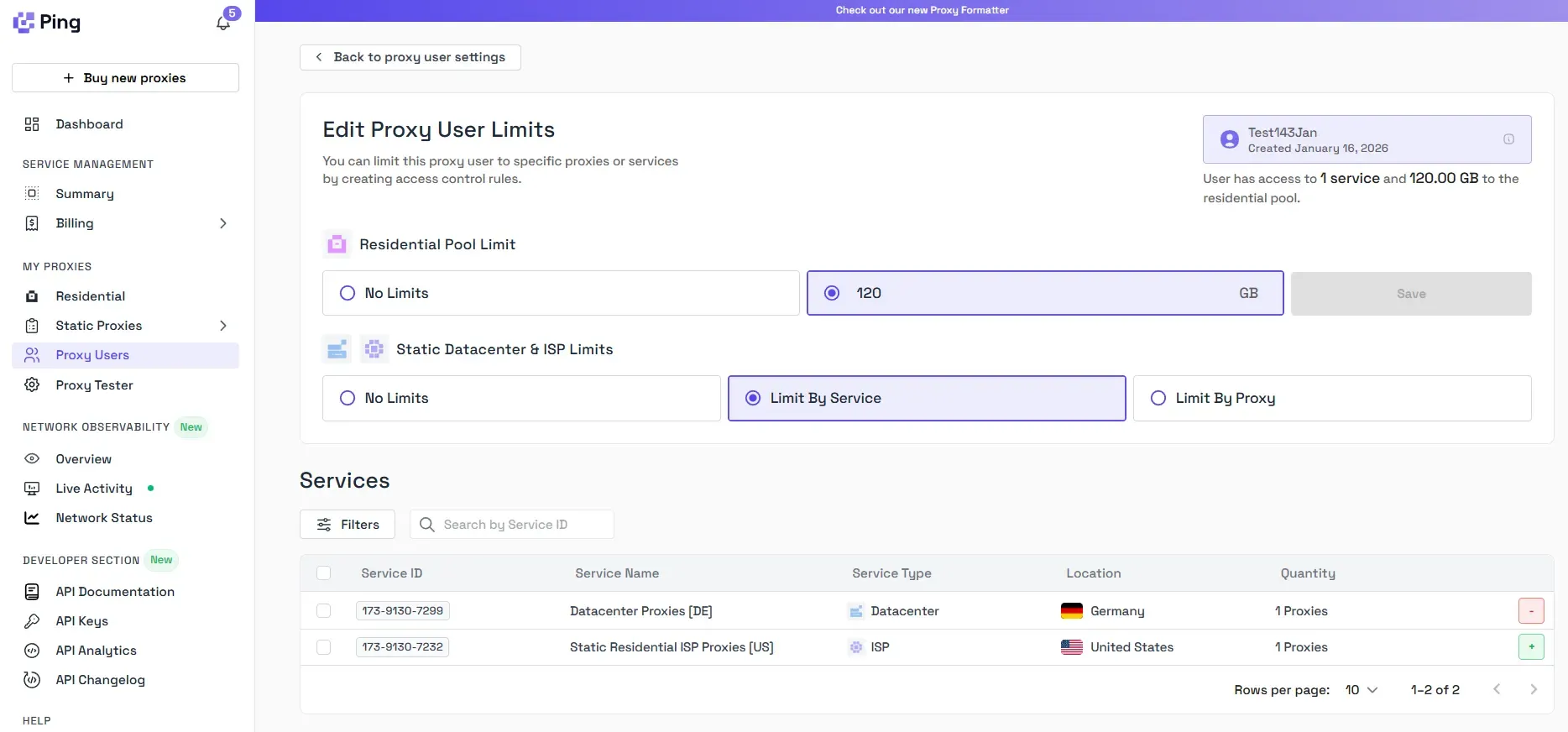
For Residential proxies, you can set a bandwidth limit that fits the workload. For Static Datacenter and ISP proxies, you get deeper control through service-level and proxy-level restrictions.
- Limit by service offers control access at the service level, with options to filter by service name, proxy type, and country.
- Limit by proxy allows per-proxy control, with the option to filter by service, country, subnet, ASN, and type.
Also, we’ve extended these features to support our API, improving the scope for automation, integration with customer systems, and flexibility for scaling.
Diagnose Proxy Failures Faster
Our Proxy Tester has been getting a lot of attention lately, and for good reason. It’s become a quick way to validate whether a proxy setup can reliably reach a target and to spot issues before they turn into wasted time in production workflows.
With many relying on it for day-to-day troubleshooting and large-scale validation, we took the next step and upgraded it further. Our goal is not just to tell you that something failed, but to help you understand where it failed and what to do next.
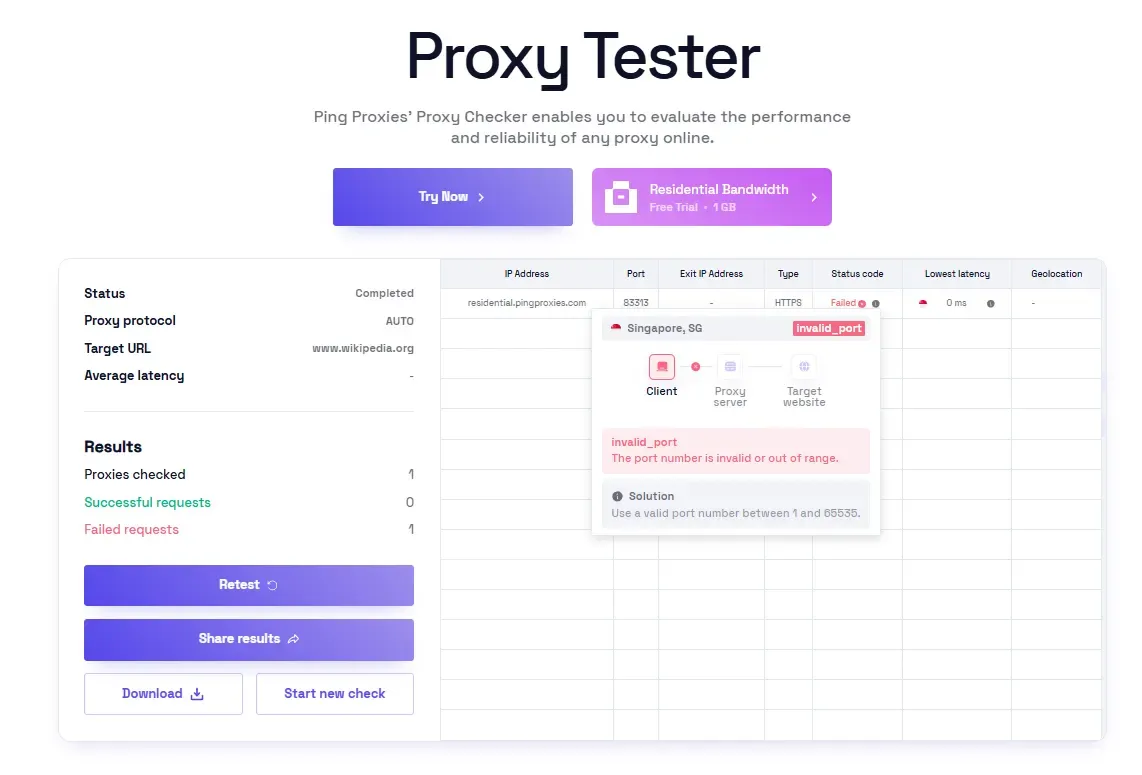
What’s new in the Proxy Tester upgrade?
- See exactly where the failure happens with a clear view of the Client → Proxy → Target chain (so you’re not guessing which hop broke).
- Get actionable explanations, not cryptic codes, with 115+ protocol-level errors translated into plain language, plus practical fix hints.
- Validate at scale via API for automated testing, reporting, and repeatable checks across workflows.
- Share results without losing detail through shareable outputs that include expanded error metadata and clearer explanations.
Tools That Speed Up Setup
When you set up new proxy workflows, a lot of time can be lost to infrastructure checks, format differences, and getting each tool to accept the same inputs. Realizing that these issues were common and constant trouble for many, we developed tools and made them free for all.
Get yourself a faster working setup, with fewer false starts!
DNS Directory
Choosing a reliable DNS resolver is hard when most public lists are static, incomplete, or outdated.
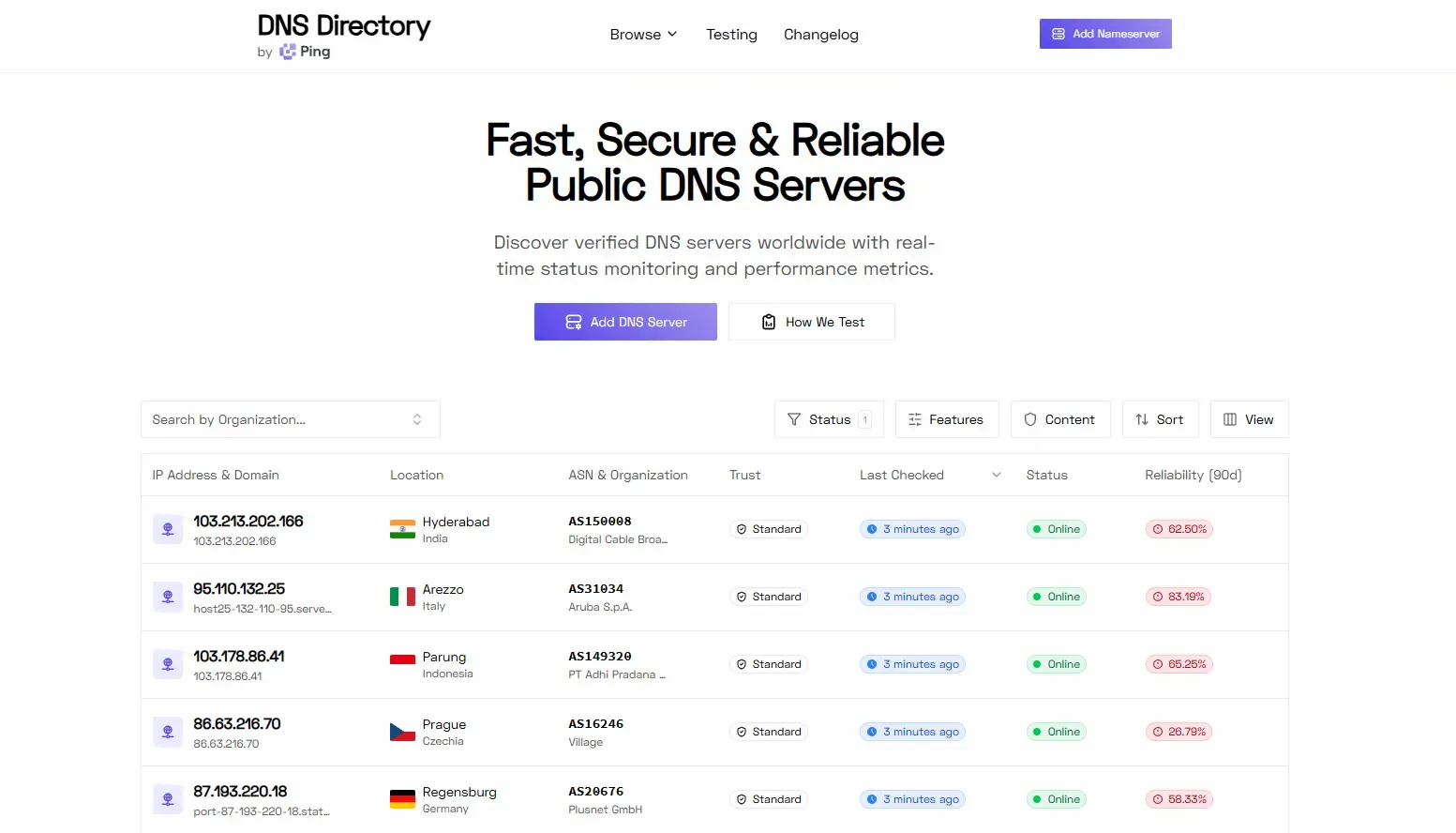
DNS Directory gives you a live, searchable view of public DNS servers. We’ve included filters for location, IPv6 support, Anycast, and also included security features such as DNSSEC and common filtering modes. Pick resolvers based on how they behave in real-time rather than guessing from stale data.
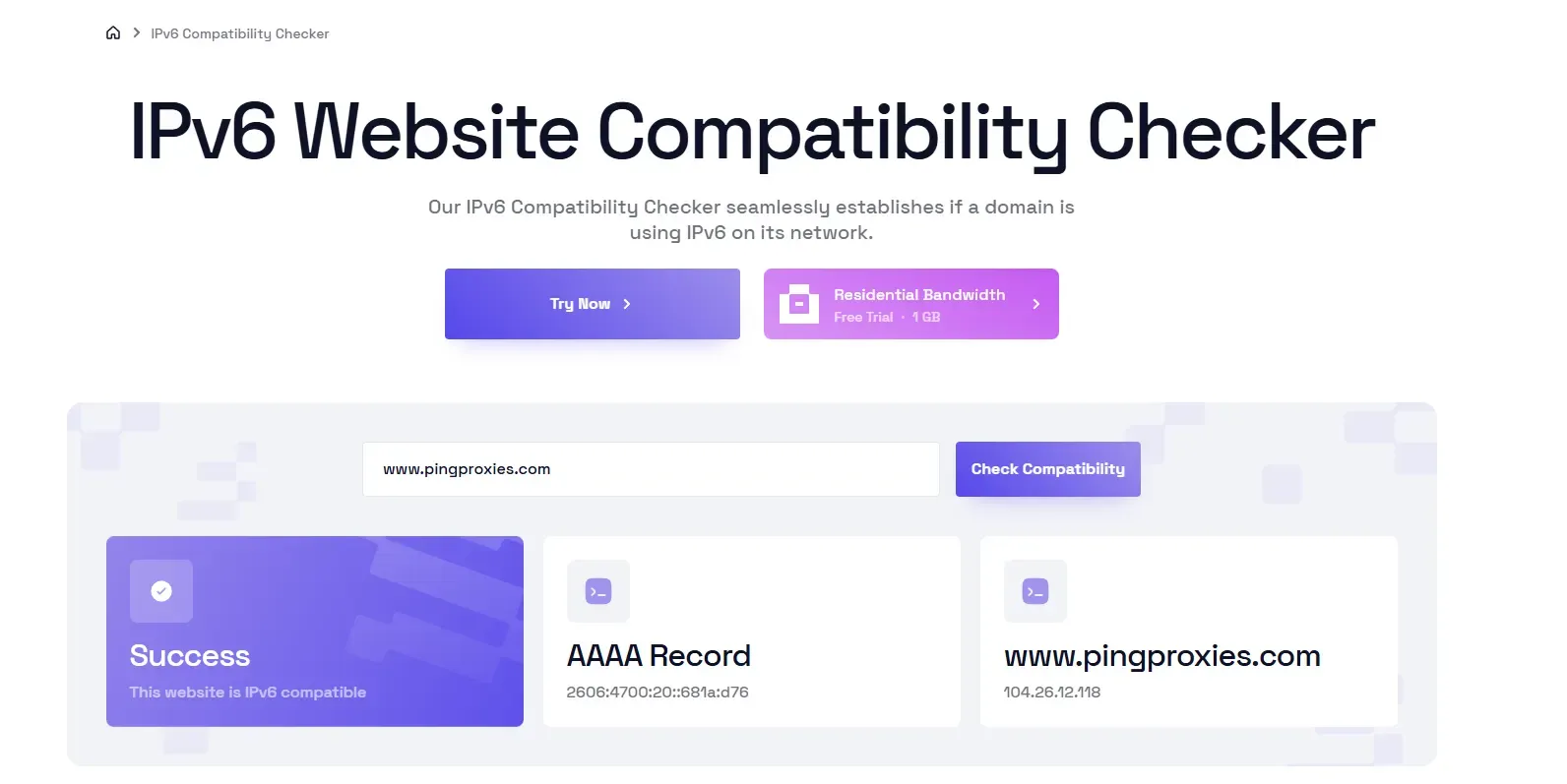
IPv6 Website Compatibility Checker
Diagnosing IPv6 issues can be confusing, as it's often unclear whether the issue is with the site, the network, or your proxy setup.
The IPv6 Website Compatibility Checker helps you quickly see whether a domain is actually reachable over IPv6. You can identify early whether the problem lies in the site’s IPv6 configuration rather than your own stack.
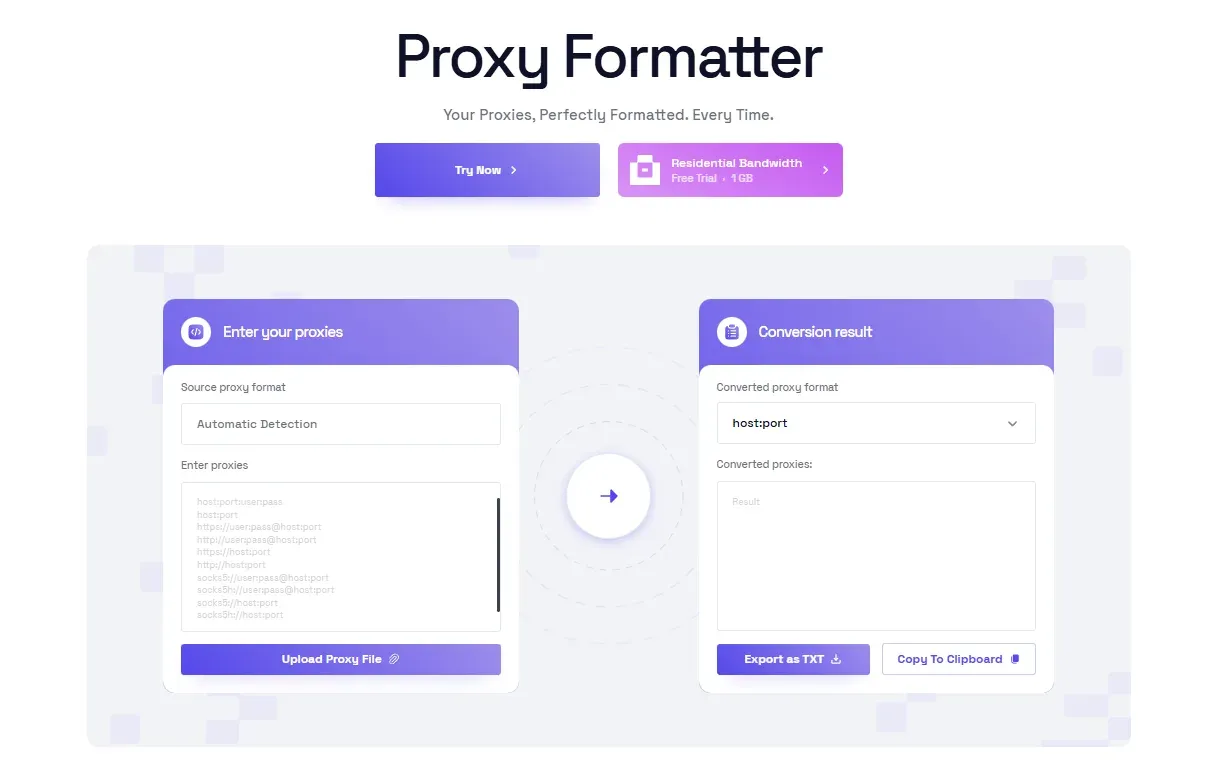
Proxy Formatter
Working with large proxy lists that are not properly organized can lead to reformatting issues. Even a single misplaced character can cause an entire setup to fail.
Use Proxy Formatter to paste your existing list and convert it into the exact structure that apps, scripts, or browser profiles accept. This way, you can reduce manual edits and reduce formatting errors.
Expanded Static Residential (ISP) Coverage
If your workflow depends on genuine local routing and long, stable sessions, coverage matters as much as performance.
Hence, we expanded our Static Residential (ISP) network with new locations in Ghana and Spain, giving you more options for local-market access for research, localization, and region-specific testing. We are proud to announce that we’re one of the first providers to offer native ISP proxy services in Africa.
These locations are now live in the dashboard alongside the rest of our ISP locations. Availability can vary by region, and live stock numbers are shown at checkout.
Partnerships and Community
We launched our Partners Page to bring together trusted companies, useful resources, and exclusive offers so our customers can get more value from the stack they already use.
We also spent time with the community at the Web Data Extraction Summit, where it was great to meet industry experts and customers, hear what’s working, and take those conversations back into how we build and prioritize what ships next.
All Ready for 2026!
As we wrap up the year, we’re genuinely grateful to everyone who's been building with our services and for the feedback that shapes what we ship.
Looking ahead to 2026, we’re working on continued improvements in residential network performance. Also, expanding and refining mobile proxy capabilities is our top priority. We’re focusing further on fingerprint resistance (ISP and datacenter), so the traffic behaves more consistently where fingerprints matter.
Apart from the above, we’re also taking steps to build extensions and applications that make it easier to use your proxies in the tools you already rely on. This includes support for agentic proxy tooling designed for more autonomous, workflow-driven use.
Got an idea you’d love to see in Ping Proxies? 🤩 Feel free to reach out at roadmap@pingproxies.com. We’re building this together, and your feedback is what keeps us moving forward.

