
Best Free Proxy Server in 2026: Free Proxy Lists and Alternatives
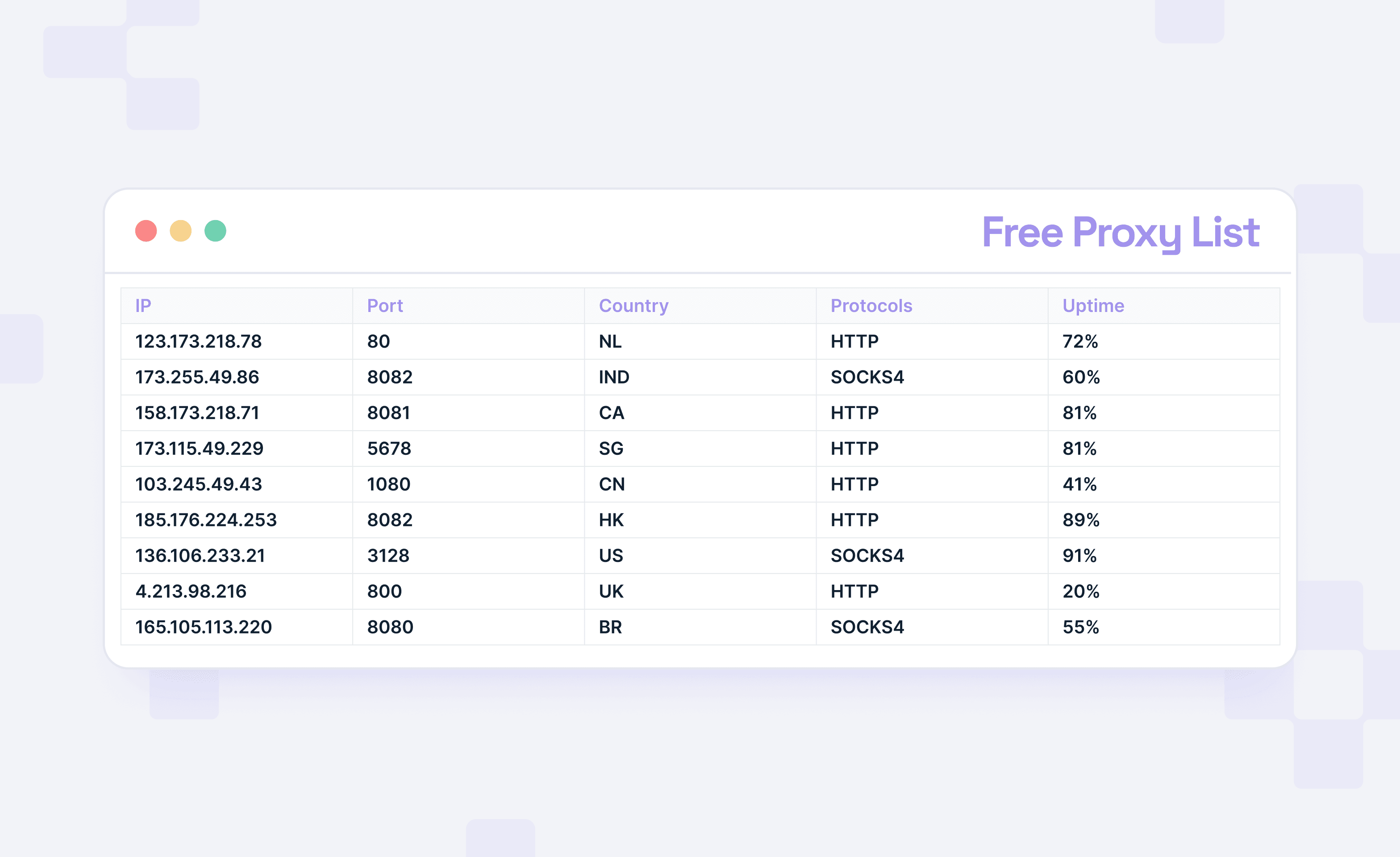
You may find thousands of proxies in a free list at first glance, but are they all reliable and safe?
This is a common question for many. Hence, we have made this guide to help you find the best free proxy service and take note of the hidden risks and limitations. Finally, we have shared safer, better alternatives, such as our 1GB residential data, to free proxy servers.
What does a “free proxy server” usually mean?
Free proxy servers are public proxy lists compiled by automated systems, which scan the web for open proxy ports. Once listed, some uptime and quality bots also periodically ping these servers and remove any that are unresponsive to keep the list healthy and functional.
They generally do not require a purchase, meaning they are literally “free” to use.
Where can free proxies be used?
There are a number of use cases where you can put the free proxy servers list to use, such as:
- Testing Site Availability: Use a proxy as a secondary check to see if a website is down for everyone or just unreachable from your current local network.
- Checking Regional Pricing: Toggle between locations to hunt for localized discounts, though the slow response times can make comparing multiple prices a bit of a project.
- Bypassing Basic IP Blocks: Regain entry to forums or sites where your primary IP has been restricted, provided the platform hasn’t already flagged the proxy’s address.
- Obscuring General Browsing: Mask your IP for a quick, one-time search, keeping in mind that your data is being routed through a publicly shared server.
- Verifying Global Content: Check if a specific ad or news article is live in another country, but expect frequent connection timeouts during the process.
The (many) risks of using free proxy servers
Free proxy server lists are often used by millions of users worldwide. This overcrowding often chokes the servers’ resources to the point you can’t rely on such services. Furthermore, there is no security guarantee by the host, and you can’t expect legal compliance with free proxies.
One should also note that the proxy server freshness matters more than the list size. However, unreliable uptime and slow speeds still plague overall performance, in addition to a few problems shared subsequently.
Logging, malware, ad injection, and credential theft
Since there is little to no incentive to maintain free proxy servers, it’s the user and their data that are turned into products by the bad actors. This can come in the form of some serious issues, where your internet activity can be logged and passwords stolen.
Furthermore, malicious servers can install malware/spyware on your local system. At the very least, you could be seeing an influx of adverts, one of the ways such “free” services make money.
Slow speeds, dead IPs, and shared abuse
Free servers are generally used by a large number of users (which drags down performance), and these lists often contain multiple dead IPs.
And if that’s not enough, the free (and often shared) infrastructure may result in you bearing the responsibility of the possible malicious use by some stranger sharing that free proxy IP with you.
Session problems, CAPTCHA triggers, and bans
Free proxies often have poor network track records, which may include web scraping and even illicit activities such as phishing and spamming.
To fight back, modern web defences, such as Cloudflare WAF, are tuned to such a degree that even users of premium proxy providers sometimes struggle with legitimate tasks.
Therefore, expecting a free proxy session to go without session timeouts, multiple CAPTCHAs, or bans is technically unrealistic.
The reason is that these free proxies are often used by thousands, if not tens of thousands, of people simultaneously. This makes free proxies restricted or banned, even by the basic web firewalls.
On the contrary, dedicated proxy gateways that offer reliable performance and greater access come at a cost needed to maintain the infrastructure.
Lack of Encryption and MITM Attacks
Most free proxy providers don’t support encryption via HTTPS tunneling. This allows middlemen (including the proxy handler) to eavesdrop on network activity and puts your sensitive data, such as login credentials, at risk.
In the worst-case scenario, hackers can alter your session data and perform man-in-the-middle (MITM) attacks, possibly resulting in session hijacking, malware injection, or malicious redirection.
Zero Accountability and Unknown Origin
The core reason serious users never rely on free proxy servers is that you don’t know who is in charge of the proxy management. In addition, there is no support team to contact, and legal compliance is practically non-existent.
Finally, you never know the origin of free proxies. As a matter of fact, some free proxies come from unsuspecting users sharing their resources without consent because of a prior malware attack.
On the other hand, paid proxy providers practice ethical sourcing of proxies, where participants are rewarded for bandwidth sharing.
Best free proxy server list (2026)
If you still want to try out free proxy lists and see if they are suitable for your needs, the sections below might be of use.
Geonode
Geonode maintains a free proxy list scraped from the internet. The list neatly presents noteworthy details, including IP, country, protocol support, uptime, latency, and last updated, to help you make the right choice. You also get a filter panel to find the appropriate server based on the same factors.
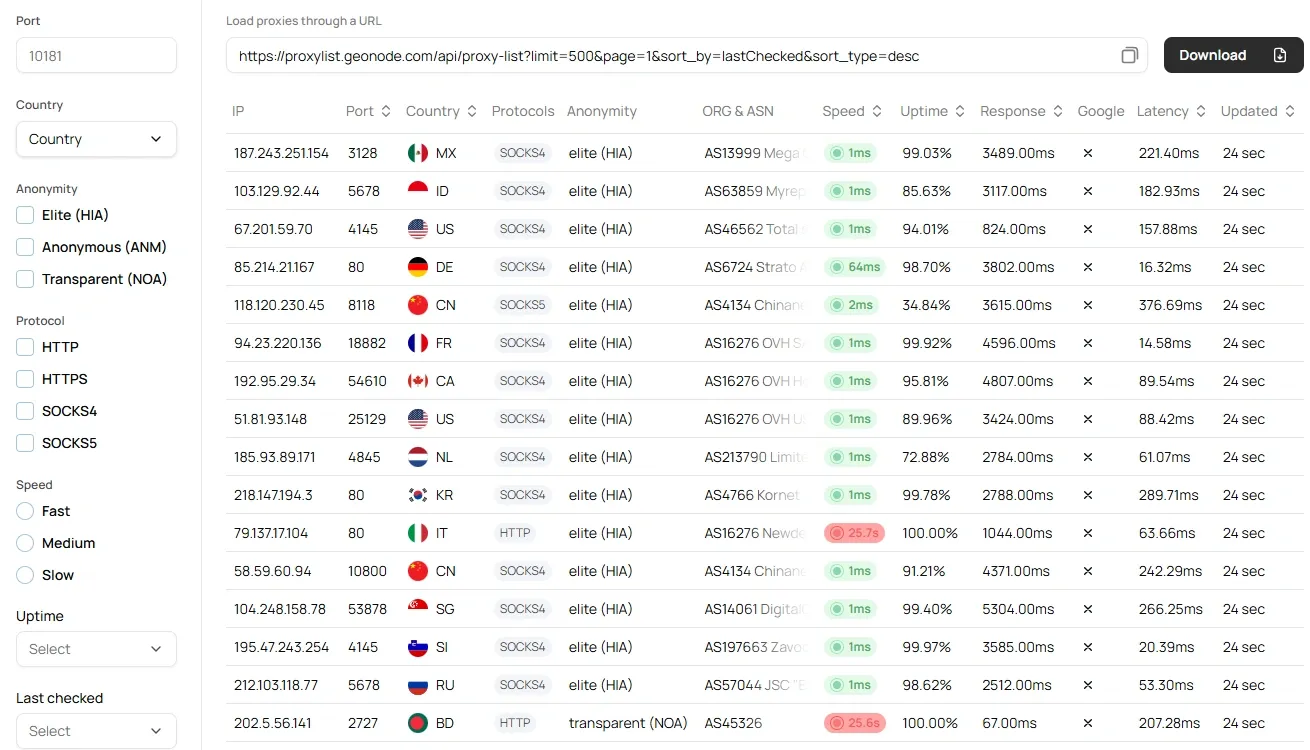
You must also check the disclaimer at the bottom, which states that Geonode bears no responsibility for the performance of these proxies.
Nodemaven
Nodemaven also features an interface similar to Geonode, where you can check free proxy IPs with necessary details, such as IP, protocol, country, latency, and last-checked timestamp.
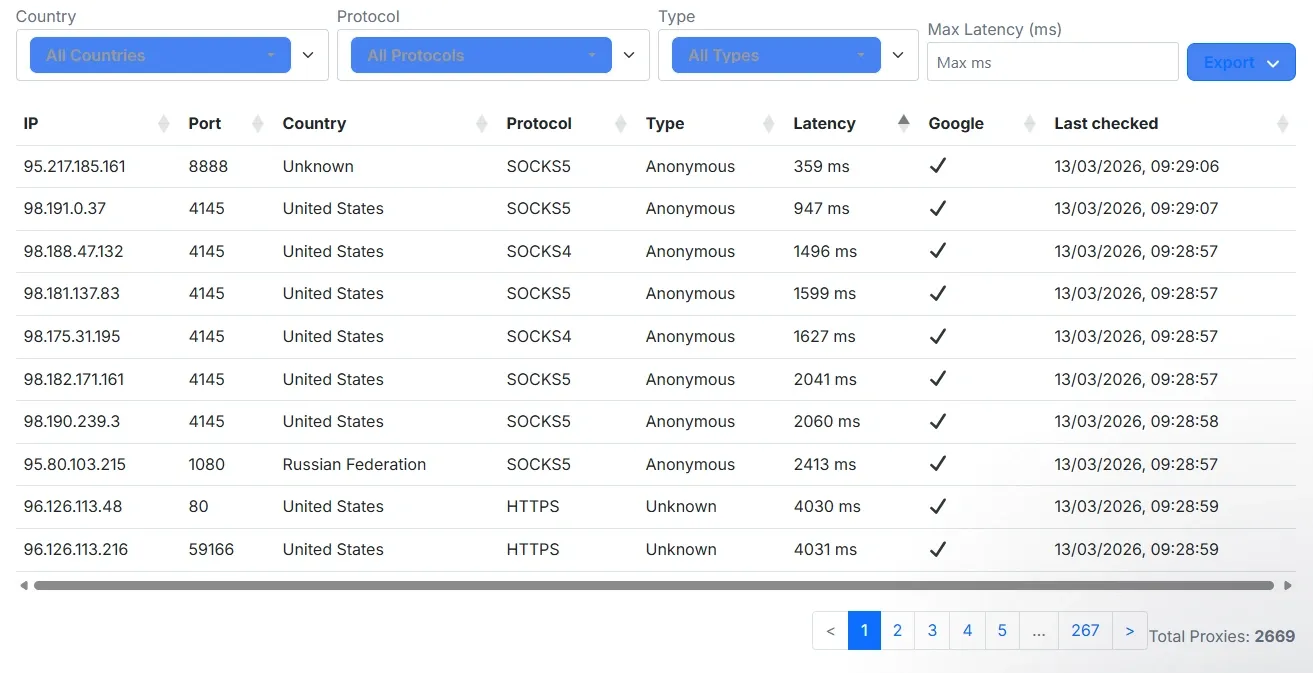
Subsequently, Nodemaven has published what you should expect regarding response times, session duration, connection success rate, and geo-targeting support. The idea is to avoid users from over-expecting with free proxies.
Also, like Geonode, Nodemaven's free proxy lists are publicly available IPs and aren’t maintained by them.
Proxyrack
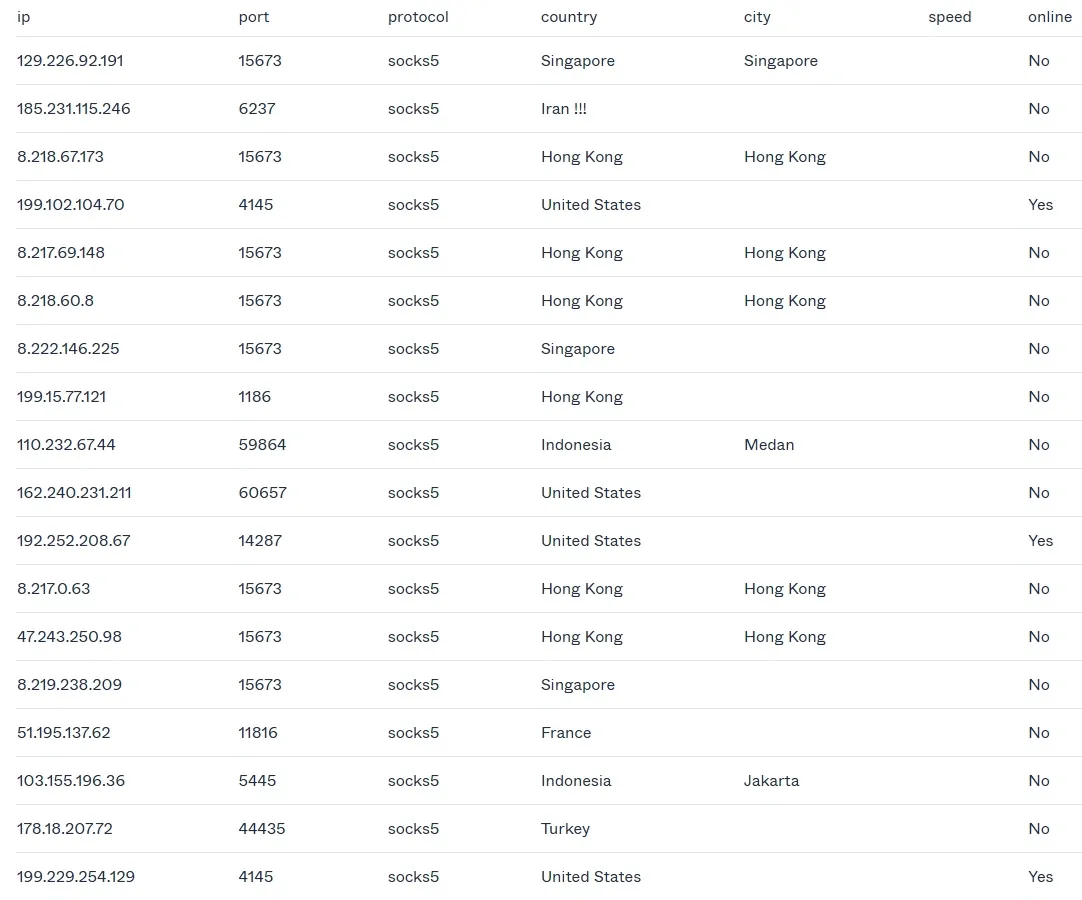
Proxyrack also maintains a free list of proxy servers. However, unlike Geonode and Nodemaven, you won’t find information about speed. In addition, most proxies were listed offline, and there was no filter to find active proxies as of this writing.
Furthermore, they haven’t provided the last checked details for the proxies that were online.
Webshare
There is a reason we have kept Webshare at the end of this section, as you won’t find thousands of free public IPs. Instead, it's a free offering that presents 10 datacenter IPs, a proxy management dashboard, a Chrome extension, and 24/7 support.
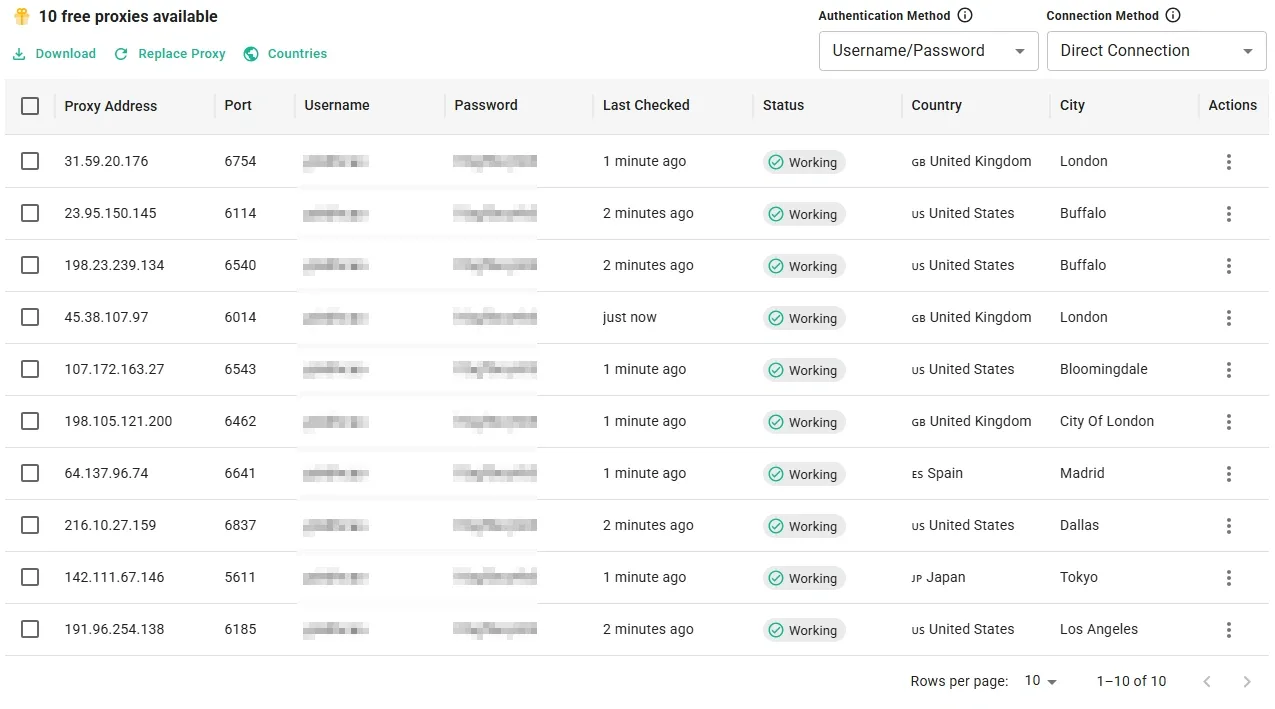
However, the free proxy bandwidth is limited, and the IPs are still shared among users.
How to test a free proxy server list before using it?
If you’ve decided to go with free proxy servers, it’s important to know you won’t get premium performance with such services. In addition, verifying certain aspects, as discussed subsequently, can save your time.
Check target server access
Among all, it’s important to see whether the subject IP works with the server you intend to use it with.
To confirm access, we will use a simple curl request within the command prompt in the following format:
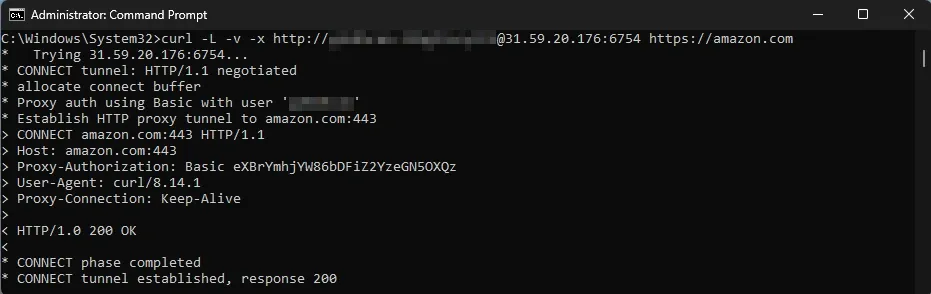
You can see "HTTP/1.0 200 OK" at the bottom of the screenshot above, which indicates the proxy worked and indeed created an HTTP tunnel. Still, later in the response, Amazon’s CDN (CloudFront) stopped the actual page content from displaying, detecting automation.
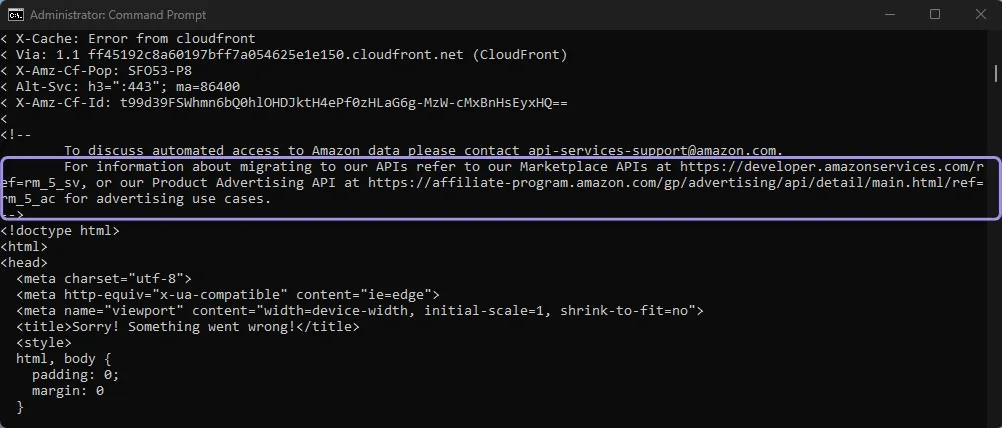
So, ultimately, it’s up to the target servers’ defences you’re up against, which might require additional measures, such as integrating proxies with an anti-detect browser, for complete access. But for casual use cases such as browsing, you can also set up a proxy with your regular browser and test with the target website.
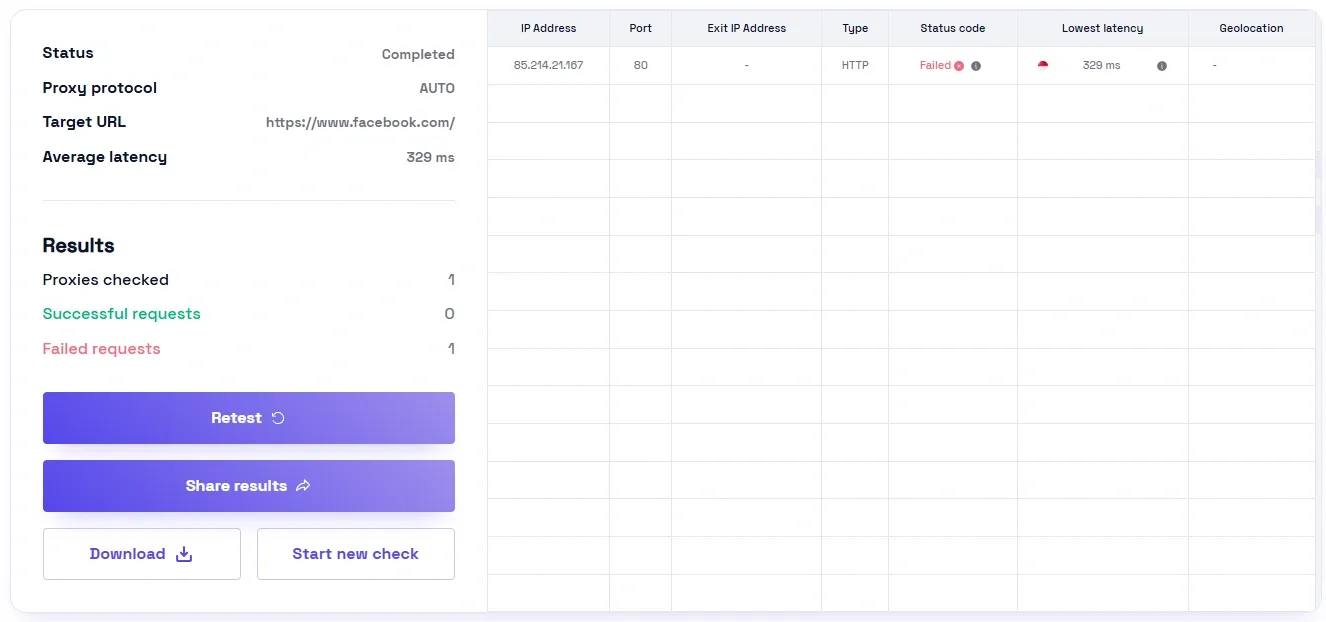
A terminal-like interface can be too much of a hassle, especially when testing in bulk. You can use our Proxy Tester instead, where you can quickly validate whether a proxy setup can reach a target and spot issues, backed by clear, actionable explanations.
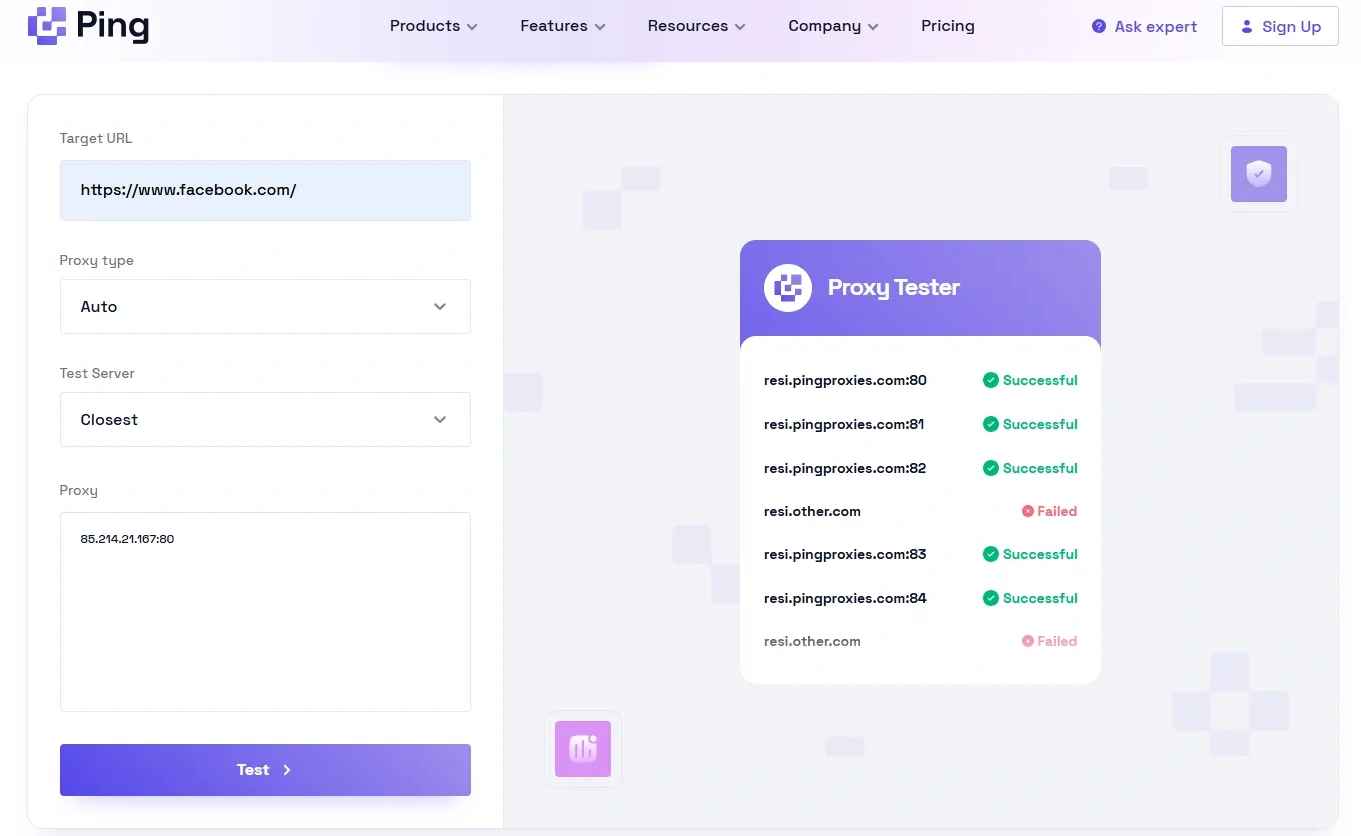
Just enter the target URL and proxy type, select the test server, and enter the proxy in IP:Port format. Afterwards, click Test to see the results (including status code and latency), as shown in the image below.
See whether the IP is already blocked
Free proxy lists are generally plagued with IPs already flagged by blacklists. And since there are hundreds of blacklists, it’s practically impossible to verify the subject IP with each of them. Therefore, there are tools such as IPVoid’s IP Blacklist Check, which let you inspect large proxy lists in one go.
Check the following screenshot, which shows IPVoid running an IP against 99 blacklists at once.
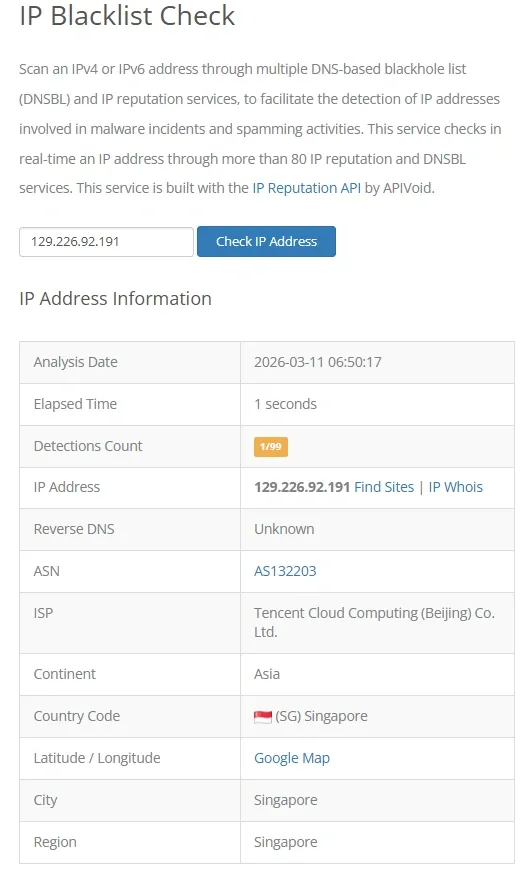
Remember, when it comes to the blacklists mentions, the rule of thumb is the less, the better. One or two blacklist mentions are common with free proxy IPs, but you should expect more CAPTCHA challenges and blocks as the number increases.
Safer Alternative to Free Proxy Servers
If you’re still reading, it means you are searching beyond what a free proxy server could realistically offer. Be it uptime, speed, geo-targeting, security, or dedicated IPs, premium proxy providers are significantly ahead compared to entirely free proxy servers.
We provide you with an intuitive dashboard, sub-second response times, and 99.9% connection success rates. That's not it, you get coverage in 195+ countries and advanced geo-targeting support, allowing you to target locations by country, city, ISP, or zip code. There is more to it, which you can test with a no-strings-attached 1GB free residential data trial.
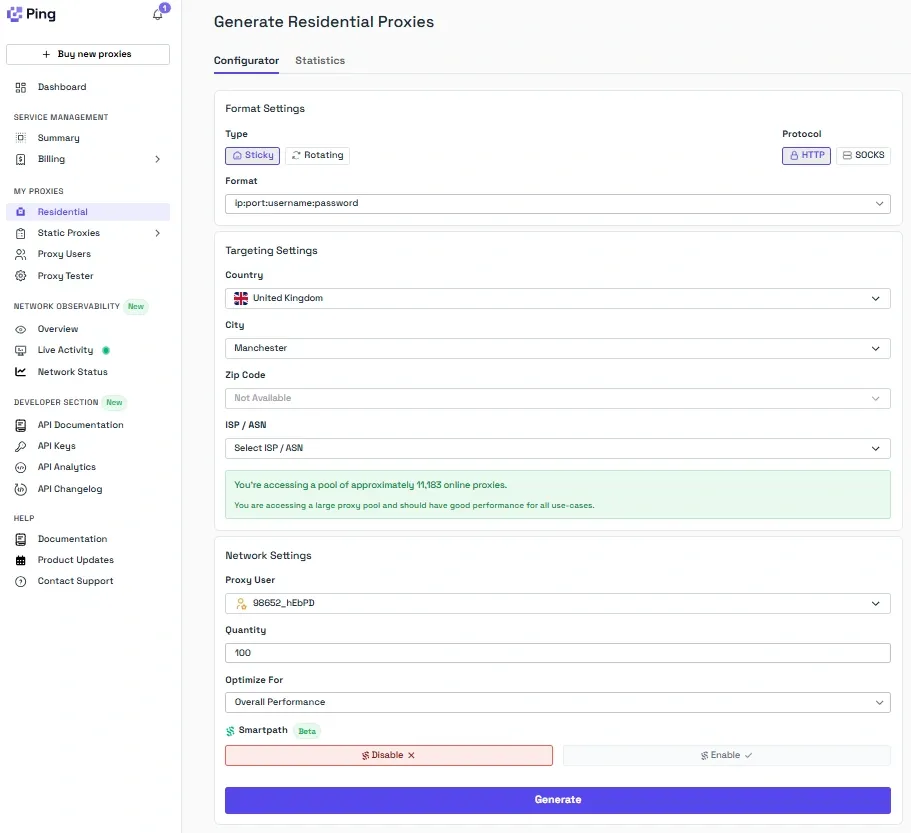
In addition, we help you automatically control proxy access by implementing ACL rules and show live network activity for real-time debugging.
We have also developed Smartpath, which automatically evaluates HTTP requests in real time and routes less-sensitive requests via datacenter IPs. The result? You save residential data (and money) without any technical setup on your end, with no extra cost.
What’s more, we also KYC our proxy users, so there is minimal risk of shared abuse.
When to move from free proxies to a paid plan?
Even when starting with free proxies, a few triggers indicate the need for a premium proxy right away.
- Scraping at scale: Free proxies generally lack the infrastructure to support critical workflows, such as large-volume scraping. You may experience slow speeds, timeouts, and frequent CAPTCHA challenges, making scraping at scale difficult.
- Long-lived sessions and sticky IP needs: Since these free IPs can go offline at any time, a task requiring session continuity should rely on paid proxies instead.
- Geo-targeted testing: Free proxies offer little to no support for geo-targeting. On the contrary, paid plans, such as ours, allow you to pinpoint specific ISPs/zip-codes in supported regions.
- Your data at risk: There is always a risk that a free proxy server could be logging and selling your data to 3rd-party marketing companies. In addition, password theft is another issue people steer clear of free proxies for.
- Highly sophisticated target server: Free IPs are often burdened by many users and lack the IP trust to match modern web defences. So consider using a premium proxy if you’re seeing errors like 403 Forbidden, 429 Too Many Requests, or 503 Service Unavailable too often.
- Blacklisting: The likelihood of a free IP being on a blacklist is significantly higher, causing web firewalls to restrict access to server resources, suspecting abuse or automation.
- High cost of proxy management: If you’re more involved in filtering dead proxies from an ill-managed free proxy list than using the active ones, it’s a sureshot indicator you should consider upgrading to paid plans.
- Greater need for HTTPS Proxies: Free HTTPS proxies are rare due to their high deployment cost and technical complexity. Consequently, you should opt for a paid proxy provider, especially if using an HTTP proxy with the CONNECT method isn’t viable.
